MiOcado – Ocado Employee Login
MiOcado is the employee portal for Ocado group employees. MiOcado can be used by all employees, including those working in a warehouse, or for online shoppers.
MiOcado provides access to your data and benefits information, such as your pay slips and revenue details. You can additionally use MiOcado to follow up on a new job at Ocado or search for vacancies from different outlets inside the company.
What is Miocado?
Miocado is a web-based platform exclusively designed for Ocado employees, providing them with a central hub for accessing work-related resources. This platform is vital for employees to stay updated with company policies, payroll details, shift schedules, and other employment benefits.
Whether managing work schedules or checking employee benefits, Miocado serves as an all-in-one solution for Ocado employees to navigate their work-life efficiently.
This portal aims to streamline the work experience by bringing all essential employee services under one roof, making it easier for workers to access necessary tools, communicate with Human resources, and stay updated on important announcements.
Why is Miocado Important for Employees?
For employees at Ocado, Miocadois more than just a website; it’s a gateway to their daily work management. With many features, this platform enhances productivity by offering employees the ability to:
- Access payroll information: Salary slips, bonuses, and deductions are laid out on Miocado, allowing for easy payroll management.
- View and manage shifts: Employees can check their schedules, request time off, and switch shifts directly through the portal.
- Check benefits: Employees can view and manage their benefits such as pension schemes, healthcare, and holiday allowances.
- Receive company updates: All important announcements, policy updates, and safety protocols are readily available on the platform.
MiOcado Login Steps
From the MiOcado log-in to managing your work schedule, the MiOcado online portal presents complete courses on navigating the Ocado employee portal.
Whether you’re a new or professional user, our specified directions will make it effortless for you to log in, view your payslips, request time off, and control your private important points – all in one place.
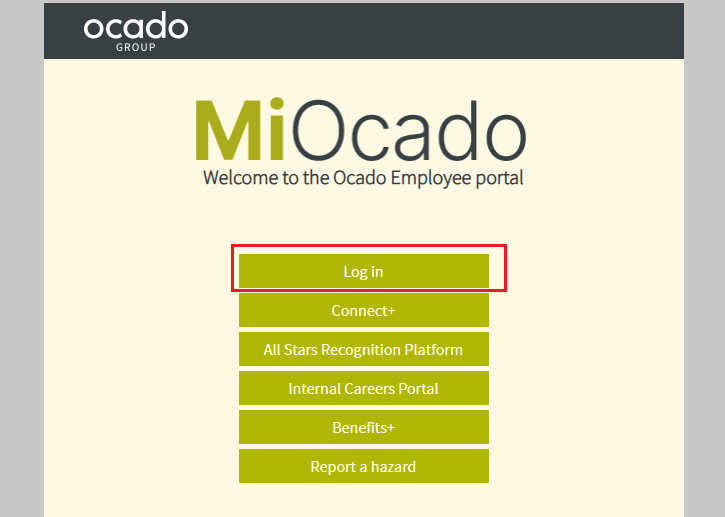
Step 1: Visit the login page: Visit the Miocado Login page using either a desktop computer or a mobile device. For you to access your account, you will need a browser that is trusted.
These are browsers that have been verified as safe and secure. The most common trusted browsers are Chrome, Firefox, Safari, and Internet Explorer.
Step 2: At the official site web page: After visiting the official site, you will see a direct login page. You will see six tabs when you enter My ocado.net:
- Log in
- Connect+
- All Stars Recognition Platform
- Internal Careers Portal
- Benefits+
- Report a hazard
Step 3: Click on the Login button: In the list of services available, click the Miocado Log-in option.
Step 4: Provide the demanded information: You will then be redirected to a web page where you can enter your login credentials, including your username and password. These are the credentials you will receive from the HR departments only if you are an employee of MiOcado.
Step 5: Submit the information: After providing the correct username and password, submit this information, and you will be redirected to the home page of your employee portal.
All employee benefits are now easily accessible, including schedules, shift timings, paychecks, and HR management software.
Ocado Group Employee Benefits
Everyone is different and it’s important that you can be you. Ocado Group offers benefits that help you balance life and maintain your well-being, complement diverse lifestyles, and support families across the world.
Depending on your job role, core benefits could include hybrid working, personalized discounts, healthcare plans, well-being support, share plans, and lots more. Learn more about the Ocado Group Employee Benefits.
Ocado Group Careers
Ocado Group offers various career opportunities across various sectors, including technology, logistics, and retail.
We build technologies that enable automated e-commerce all over the world, leading the way in smart warehouses, robotics, mechatronics, e-commerce software, and much more. Learn more abiou the Ocado Group career opportunities.